GLP-1 diet plan: what to eat (and what to go easy on)
A simple framework for eating on Ozempic, Wegovy, Mounjaro or Zepbound, with a sample day and fixes for nausea and constipation.
There is no special "Ozempic diet." But eating on a GLP-1 medication is different. Your stomach empties more slowly, you fill up faster and some foods that never bothered you before can suddenly make you feel queasy. A few simple rules make the whole experience smoother and help the weight you lose be mostly fat.
This is general information, not medical advice. Always follow your prescriber's guidance, especially around dose changes or side effects.
The four rules
1. Protein first, every meal
With a smaller appetite you get fewer bites per day, so each one matters. Start meals with the protein part of the plate. Most adults losing weight do well with about 1.2–1.6 g of protein per kg of goal weight per day, usually 80–120 g. (We go deeper in how much protein you need on a GLP-1.)
2. Smaller plates, slower pace
GLP-1s slow how quickly food leaves your stomach. Eating a normal-size meal quickly is one of the most common triggers of nausea, bloating and reflux. Use a smaller plate, put your fork down between bites and stop at the first sign of fullness. You can always eat again in two hours.
3. Plants and fiber, added gradually
Vegetables, fruit, beans, oats and whole grains help with fullness, blood sugar and, importantly, constipation, which is a frequent side effect. If you're not used to much fiber, increase it slowly over a couple of weeks to avoid gas and bloating.
4. Drink more than you think
Because you're eating less, you're also getting less water from food, and thirst can be blunted too. Sip water throughout the day. Dehydration makes nausea, headaches, fatigue and constipation worse.
Foods to go easy on
These aren't forbidden. They're just the ones people most often report feeling worse after:
- Greasy and fried food (fries, fried chicken, heavy cream sauces). Fat slows digestion even further.
- Very large meals, especially in the days after a dose increase.
- Sugary drinks and sweets. Easy calories with little protein, and they can cause energy dips.
- Carbonated drinks, which can worsen bloating and burping.
- Alcohol. Many people find they tolerate it much less well, and it adds calories with no nutrition. Discuss it with your prescriber.
How many calories should you eat?
Most people on GLP-1s don't need to force a deficit; the medication does much of that work. The risk is the opposite: eating so little that you lose more muscle, feel exhausted and struggle with hair shedding or dizziness.
As a loose guide, many adults on these medications end up somewhere around 1,200–1,800 kcal a day depending on size, sex and activity. If you're regularly eating well under 1,000 kcal, mention it to your prescriber. Logging food for a week or two is the easiest way to find out where you actually are.
A sample day
About 1,450 kcal and 105 g of protein, split into smaller portions:
| Meal | What | Protein |
|---|---|---|
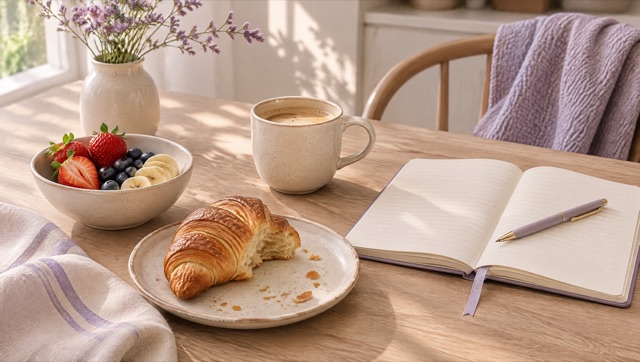
| Breakfast | 2 scrambled eggs, 1 slice whole-grain toast, a handful of spinach | ~16 g |
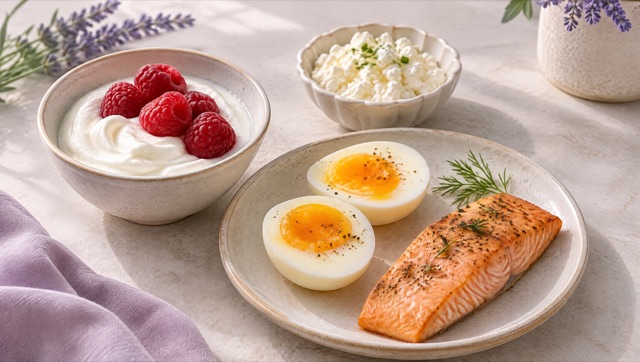
| Mid-morning | Greek yogurt (200 g) with raspberries | ~20 g |
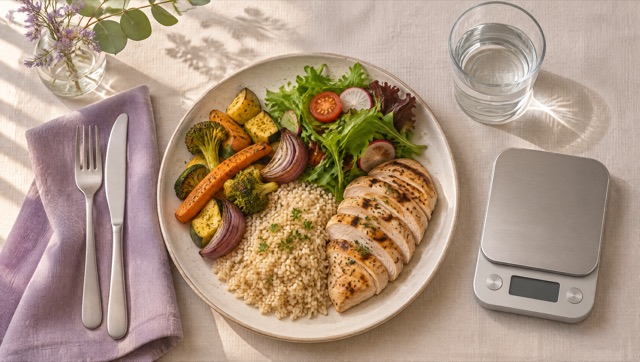
| Lunch | Chicken, quinoa and roasted-vegetable bowl (small portion) | ~30 g |
| Afternoon | Protein shake or cottage cheese with cucumber | ~20 g |
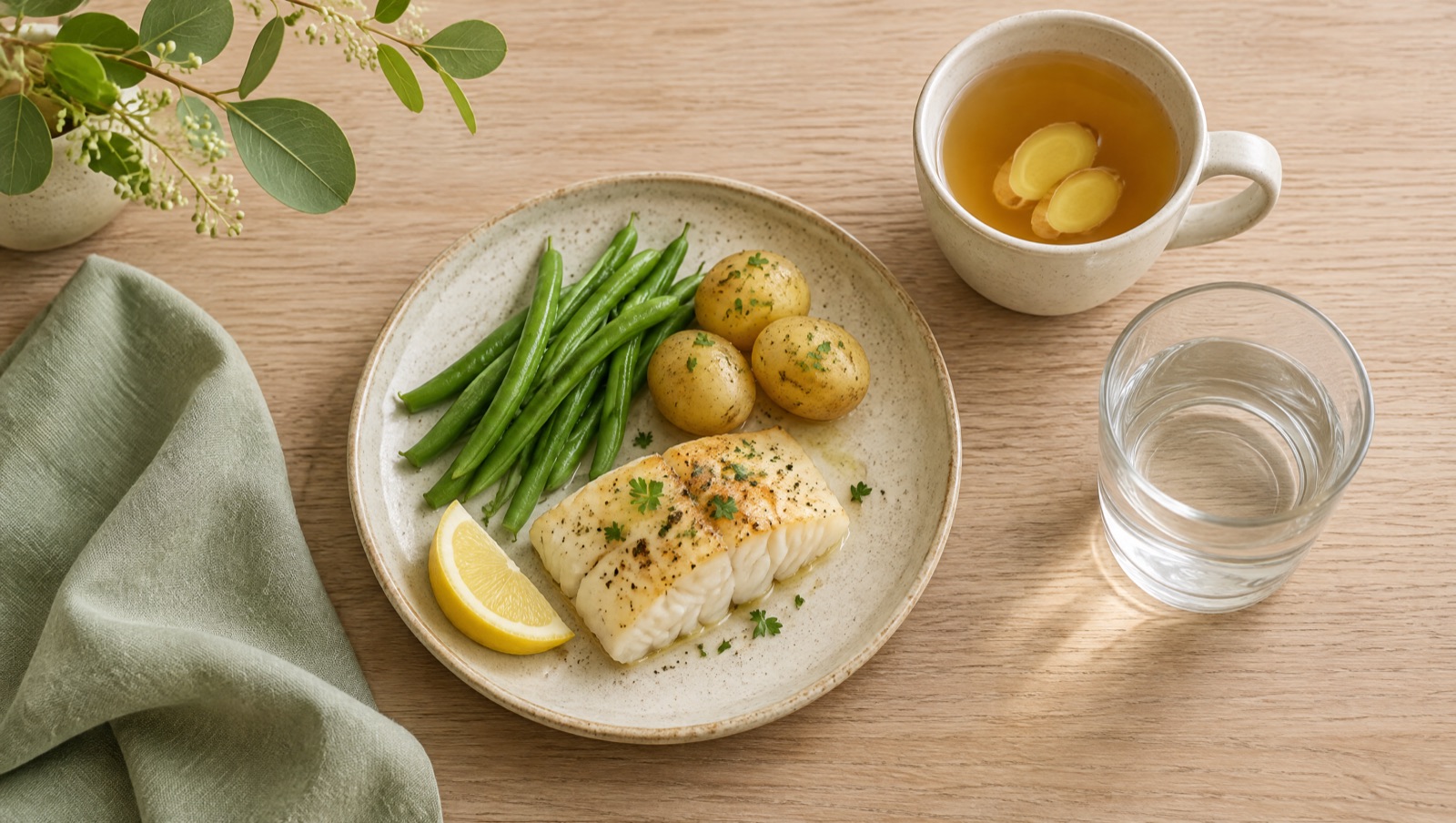
| Dinner | Baked cod or tofu, steamed green beans, a few small potatoes | ~22 g |
On days when you're barely hungry, keep the protein snacks and shrink the rest.
Handling common side effects with food
Nausea
- Eat smaller, more frequent meals and stop at "satisfied," not "full."
- Choose bland, cool or room-temperature foods: yogurt, crackers with cheese, toast, rice, bananas, chicken.
- Avoid lying down right after eating.
- Ginger or peppermint tea helps some people.
Constipation
- Increase fiber slowly: oats, chia, kiwi, prunes, beans, vegetables.
- Drink more water alongside the fiber, or it can make things worse.
- Daily walking helps keep things moving.
Reflux and burping
- Smaller, earlier dinners (2–3 hours before bed).
- Less fat, fizzy drinks, chocolate, coffee and alcohol in the evening.
If side effects are severe, persistent, or you can't keep fluids down, contact your healthcare provider.
Plan for the long term
The habits you build while on the medication (protein-first meals, regular strength training, knowing your portions) are the same ones that help you keep the weight off later. Treat this period as practice, not just as a time when you happen to eat less.
The short version
- Protein first, small plates, eat slowly, stop early.
- Add fiber and water gradually to prevent constipation.
- Go easy on greasy food, big meals, fizzy drinks and alcohol.
- Don't under-eat: check your intake with a food log every so often.
This article is for general information and isn’t a substitute for advice from your doctor or a registered dietitian.
Let the app do the math
EatCount tracks calories and protein from a photo or a sentence. Join the waitlist for early access.