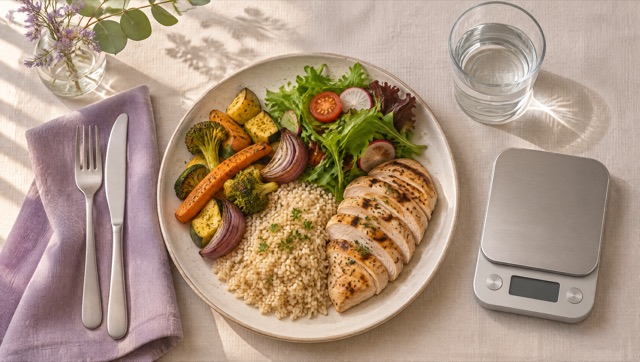
Weight loss plateau: why the scale stopped moving
Stuck for weeks despite doing everything right? Here's how to tell a real plateau from a fake one, and how to break through.
You started strong, lost a few kilos, and then the scale froze. Almost everyone who loses weight hits a stall at some point. The good news: most plateaus have ordinary, fixable causes.
First, is it really a plateau?
Body weight swings by 0.5–2 kg from day to day because of water, salt, carbohydrates, hormones and digestion. A week with no change is often just noise.
If you started strength training recently, the scale may also be hiding progress: water and glycogen in newly worked muscles can mask fat loss for a few weeks. Check your waist and how clothes fit.
Why plateaus happen
You need fewer calories now
A smaller body burns less energy, both at rest and during movement. Lose 8 kg and your daily needs may drop by 100–200 kcal or more. The deficit that worked at the start may now be close to maintenance.
Metabolic adaptation
On top of that, your body becomes a bit more efficient during a sustained deficit. Energy expenditure can fall slightly more than size alone would predict. This effect is real but usually modest; it's rarely the whole story.
You move less without noticing
When you're eating less, you tend to fidget less, take fewer steps and rest more, often unconsciously. This "non-exercise activity" can account for a surprising share of the calories you burn each day.
Calorie creep
After a few weeks, logging gets looser. Portions grow, the cooking oil goes unmeasured, weekend meals don't get recorded. None of it feels significant, but 200–300 kcal a day of drift is enough to erase a deficit.
Water retention
Stress, poor sleep, a new workout routine, a salty meal or the menstrual cycle can all make you hold extra water for days or weeks, hiding fat loss underneath.
How to break through
- Audit a week honestly. Log everything for 7 days, weighing calorie-dense foods (oils, nuts, cheese, pasta, rice). Include drinks and weekends. This alone solves many plateaus.
- Recalculate your target based on your current weight, then reduce by another 100–150 kcal if needed. Small changes are easier to keep.
- Add steps before cutting more food. An extra 2,000–3,000 steps a day can burn roughly 100–150 kcal and is often easier than eating less.
- Keep protein high (about 1.2–1.6 g per kg of goal weight). It's filling and protects muscle as your intake drops.
- Lift weights two or three times a week to keep muscle and improve body composition.
- Sleep 7–9 hours. Short sleep increases hunger and makes the plan harder to follow.
- Consider a maintenance break. If you've been dieting for months and feel worn out, eating at maintenance for 1–2 weeks can restore energy and motivation before you continue.
When a plateau is actually a good place
Sometimes the scale stops because you've reached a weight your body and lifestyle can comfortably hold. If you feel good, your health markers have improved and further loss would require a lifestyle you don't want, maintaining is a legitimate goal, and a successful one.
If you're truly stuck despite careful tracking, or you notice other symptoms like fatigue, feeling cold or changes in your period, it's worth checking in with a doctor about thyroid function, medications or other factors.
The short version
- A real plateau means no change in weekly average weight and waist for 3–4 weeks.
- The usual causes: lower calorie needs, less daily movement, calorie creep and water retention.
- Fix it by auditing your log, recalculating, walking more, keeping protein high and sleeping well.
This article is for general information and isn’t a substitute for advice from your doctor or a registered dietitian.
Let the app do the math
EatCount tracks calories and protein from a photo or a sentence. Join the waitlist for early access.