Why belly fat won't go away, even when you're losing weight
The scale is moving but your stomach isn't. Here's what's really going on and what actually helps.
You've lost a few kilos. Your face looks slimmer, your rings are looser, but your stomach looks almost exactly the same. It's one of the most common frustrations in weight loss, and it's usually not a sign that something is wrong.
You can't choose where fat comes off
Crunches and "belly-burning" workouts strengthen your abdominal muscles, but they don't burn the fat on top of them. Studies that had people train one body area for weeks have repeatedly found no meaningful extra fat loss in that spot. When you're in a calorie deficit, your body pulls energy from fat stores all over, in an order that's largely set by genetics, sex and hormones.
For many people, the stomach and lower belly are simply last in line. That's frustrating, but it also means the fat there will go if you keep going.
Two kinds of belly fat
There are two different types of fat around your middle, and they behave differently:
- Subcutaneous fat sits just under the skin. It's the part you can pinch. It's often the stubborn layer that lingers on the lower belly.
- Visceral fat sits deeper, around your organs. You can't pinch it, and it's the type most strongly linked with heart disease and type 2 diabetes.
Here's the good news: visceral fat tends to respond early to weight loss and exercise. So even when the mirror doesn't show much change yet, the most harmful fat is often already shrinking.
Why your belly might be hanging on
Your genes and sex
Where you store fat, and where you lose it first, is strongly inherited. Men tend to store more fat around the abdomen. Women tend to store more on hips and thighs before menopause.
Menopause
As estrogen falls, fat storage often shifts toward the belly, even without weight gain. It's a real biological change, not a lack of effort. Strength training and adequate protein become especially helpful here.
Short sleep and chronic stress
Regularly sleeping less than about 7 hours is linked with more hunger, more cravings and greater weight gain around the middle. Chronic stress can push in the same direction, mostly by changing how and how much we eat.
Alcohol
Alcohol adds calories that are easy to forget, lowers your guard around food and is associated with more abdominal fat. Cutting back is one of the most effective changes for many people.
Bloating, not fat
Sometimes what looks like belly fat is partly bloating: gas, constipation, high salt intake or simply a big meal. It can change your waistline by several centimeters from morning to evening.
What actually helps
- Stay in a modest calorie deficit for long enough. Fat loss from the belly usually lags behind other areas by weeks or months.
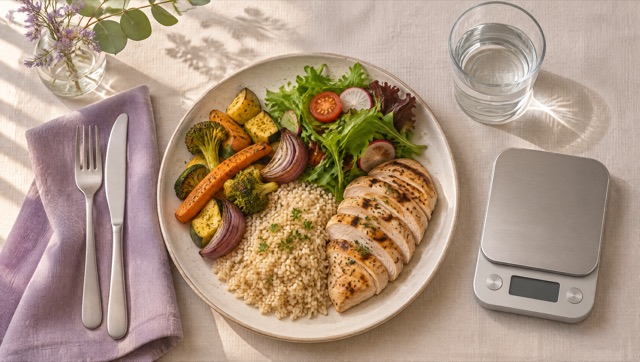
- Get enough protein (around 1.2–1.6 g per kg of goal weight) so more of what you lose is fat rather than muscle.
- Lift something two or three times a week. More muscle improves body shape even before the fat is fully gone.
- Move every day. Walking and other aerobic activity are particularly good at reducing visceral fat.
- Cut back on alcohol and sugary drinks.
- Protect your sleep. Aim for 7–9 hours.
Measure the right thing
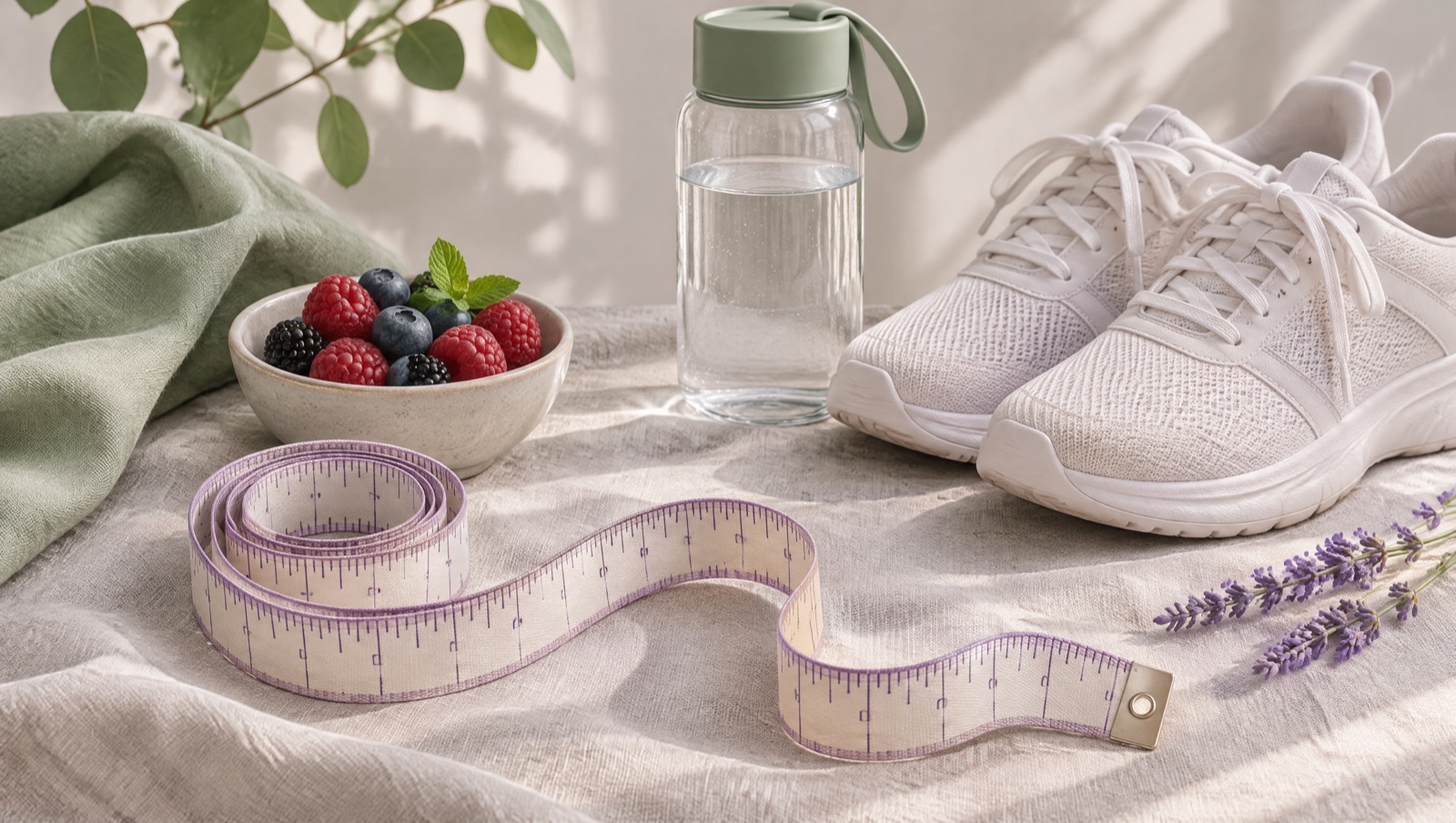
The scale won't tell you where the weight is coming from. Add a waist measurement: once a week, same time of day, tape level around the navel, relaxed (not sucked in). A useful health benchmark is a waist less than half your height (for example, under 85 cm if you're 170 cm tall).
Progress photos in the same lighting every 2–4 weeks are also more honest than the mirror, which you see too often to notice slow change.
When to see a doctor
Talk to a healthcare professional if your belly is growing quickly without weight gain, feels hard or painful, or comes with other symptoms such as changes in bowel habits, heavy periods or ongoing bloating. Those situations deserve a proper check.
The short version
- You can't spot-reduce. Belly fat is often the last to leave.
- The dangerous deep (visceral) fat usually goes first, even if you can't see it.
- Deficit, protein, strength training, daily movement, less alcohol and better sleep is the combination that works.
- Track your waist weekly, not just your weight.
This article is for general information and isn’t a substitute for advice from your doctor or a registered dietitian.
Let the app do the math
EatCount tracks calories and protein from a photo or a sentence. Join the waitlist for early access.